What Questions Should I Ask My Grandmother?

A grandmother’s stories often live in the small details: the smell of her mother’s kitchen, the first job that made her feel capable, the song playing when she met your grandfather, or the advice she almost gave but wisely kept to herself. If you are wondering, “what questions should I ask my grandmother,” start with this simple idea: you are not giving her a test. You are making room for her to be heard.
The best conversations do not sound like an interview at first. They sound like time together. A cup of coffee, a familiar chair, and one sincere question can lead to an hour of memories your family has never heard before.
What Questions Should I Ask My Grandmother First?
Begin with questions that feel easy to answer and have no right or wrong response. Childhood is often a welcoming place to start because it lets your grandmother step back into a time when the people, places, and routines were vivid.
You might ask:
What is one of your earliest memories?
What was the house you grew up in like?
Who made you laugh when you were a child?
What did your family do for fun when you were young?
What foods do you still connect with your childhood?
What did you get in trouble for as a child?
These questions are gentle openings, not a script to race through. If she mentions a sister who could make a pie from scratch or a neighbor who owned the first television on the block, stay there. Ask what that person was like. Ask what happened next. The side roads are often where the real story lives.
It also helps to avoid beginning with broad questions such as, “Tell me your life story.” That can feel overwhelming, even to someone who has a lifetime of wonderful material. A smaller question gives her something solid to hold onto.
Questions About Family, Love, and Home
Family memories help future generations understand more than names and dates. They reveal the habits, humor, sacrifices, and loyalties that shaped the people who came before them.
Ask about the people who mattered most. “What was your mother like when nobody else was around?” may bring out a far richer answer than “Tell me about your mother.” “What did your father teach you without saying it out loud?” can uncover values that traveled quietly through the family.
Questions about love can be especially meaningful, but let her set the pace. Consider asking:
How did you meet your spouse or first serious love?
What did you enjoy doing together when you were young?
What made a house feel like home to you?
Who in the family did you go to when life was difficult?
What family traditions do you hope continue?
What do you remember about becoming a mother or grandmother?
Not every family story is cheerful, and it does not need to be. A life story is more honest when it includes hard seasons alongside happy ones. If your grandmother speaks about loss, divorce, illness, financial strain, or conflict, listen without trying to quickly brighten the moment. A quiet “That sounds like it was hard” is often more helpful than a cheerful reply.
Ask About the World She Lived Through
Your grandmother has lived through changes that may seem ordinary to her and astonishing to younger family members. She may remember party-line telephones, ration books, school drills, a first airplane trip, a neighborhood where doors were left open, or the day a major national event changed the feeling of the country.
Rather than asking her to explain an entire era, connect history to her own experience. Try questions like:
What did a typical school day look like when you were growing up?
What did people in your town worry about or celebrate?
What was your first job, and what did it pay?
What was considered a real luxury in your family?
What change in the world surprised you most?
What do you think young people today would find hardest to understand about your generation?
These answers give context to family history. They also preserve the texture of everyday life, which is often the first thing to disappear. A census record may tell a descendant where someone lived. It cannot tell them how Saturday mornings felt, what a winter coat cost, or why everyone gathered around the radio.
Questions That Preserve Her Wisdom
Grandchildren sometimes assume their grandmother knows she is loved but do not realize how much her perspective is needed. Asking for advice is a meaningful way to say, “Your life has taught you something worth carrying forward.”
You can ask, “What do you wish you had worried less about?” or “What helped you get through a difficult time?” You might ask what she believes makes a marriage last, what she wishes she had known at twenty, or what makes a person a good friend.
Some of the strongest questions are plainspoken:
What are you most proud of?
What do you want our family to remember about you?
What is something you changed your mind about over the years?
What is the best decision you ever made?
What would you like your great-grandchildren to know?
What does a good life mean to you?
Do not be surprised if the answer is modest. Many grandparents will say, “Oh, I didn’t do anything special.” That is your cue to be specific. Remind her of what you have seen: her perseverance, her generosity, the way she held a family together, the meals she made, the care she gave. Often, people need a little encouragement to recognize the significance of their own lives.
Make the Conversation Feel Comfortable
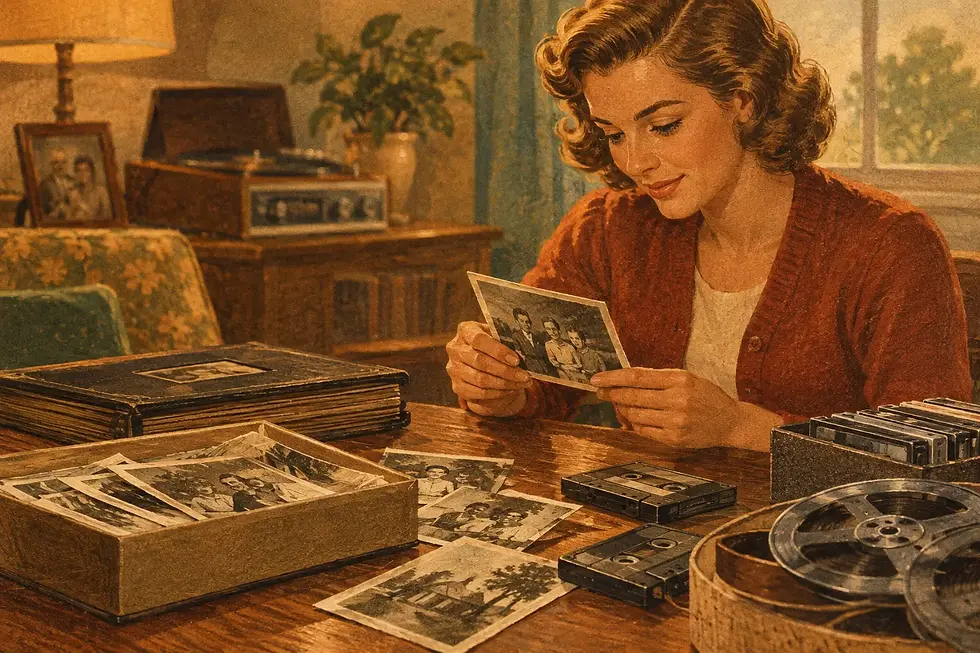
A good question matters, but the way you ask it matters just as much. Choose a time when your grandmother is rested and not rushed. One meaningful conversation is better than an exhausting three-hour session. If she enjoys looking at old photographs, bring a few. A photo can open a memory with almost no effort at all.
Give her time to think. Silence is not a failure. Some memories arrive slowly, and interrupting too quickly can close a door that was just beginning to open.
You should also ask permission before recording. Many people are happy to have their voice saved, especially once they understand that it will be kept within the family. Still, a simple, respectful question matters: “Would you mind if I recorded this so I can remember it accurately?” Her comfort comes first.
If she repeats herself, let her. Repetition may mean the memory holds special meaning, or it may simply be part of a natural conversation. You can gently ask for a detail you missed before: “I love that story. What was the name of the street again?”
When a Question Feels Too Personal
Some subjects require more care. Questions about estranged relatives, traumatic events, money, health, or regret can be important, but they should never feel like an obligation. You can offer an opening without pressing: “Is there anything about that time you would like to share?” If the answer is no, accept it warmly and move on.
A legacy is not made more truthful by forcing someone to revisit pain before they are ready. It is made more valuable by honoring the person telling it. Your grandmother gets to decide what belongs in her story.
Turn Stories Into Something the Family Can Keep
After the conversation, write down a few notes while the details are fresh. Save the recording in more than one place. Label photographs with names, places, and approximate dates while your grandmother can still help identify them. These small acts make an enormous difference later.
If gathering, organizing, and preserving everything feels like more than your family can manage, it is perfectly reasonable to ask for help. Heritage Circle helps families turn spoken memories into a carefully shaped legacy book, preserving both the written story and the sound of a loved one’s voice without asking grandparents to wrestle with complicated technology.
The most meaningful question may be the one you ask this week, while there is still time to hear the answer in her own voice. Sit down, start small, and let her take you somewhere only she can go.