Best Family History Formats for Real Families

A shoebox of photographs can hold a family’s faces, but not always its stories. Your grandchildren may recognize the old wedding portrait, yet never know how their great-grandparents met, why the family moved across the country, or what made Grandma laugh so hard she could not finish a sentence. The best family history formats make room for those details - the ones that turn names and dates into people.
There is no single right way to preserve a family story. A beautiful photo album may be exactly right for one family. Another may need a spoken memoir, a family tree book, or a full written history. The best choice depends on what you hope to save, who will use it, and how much help the storyteller wants along the way.
What Makes a Family History Format Worth Keeping?
A good format does more than store information. It should feel welcoming enough that someone will actually open it, listen to it, or pass it along. It should also preserve the storyteller’s personality. A life story written in polished sentences is valuable, but a grandchild may treasure hearing the familiar voice behind those words just as much.
Think about the future reader. A relative researching genealogy may care deeply about full names, dates, places, and relationships. Young children often respond first to photographs and short stories. Adult children may be most moved by the memories their parent never had time to share at the dinner table.
The strongest projects often combine formats. A printed book can provide a lasting, comfortable way to read. Scannable QR codes can connect readers to the original audio. A private digital page can make sharing easier when family members live in different states. Paper and digital preservation do not have to compete with each other.
The Best Family History Formats to Consider
A personal memoir or life-story book
For preserving one person’s voice, a memoir-style book is often the most meaningful choice. It follows a life through childhood, work, love, parenthood, faith, challenges, traditions, and the lessons gathered along the way. It does not need to cover every single year. In fact, the most engaging memoirs focus on the moments that shaped a person.
This format works especially well for a parent or grandparent who says, “I wouldn’t know where to begin.” A thoughtful interviewer can begin with a simple question about a childhood home or a first job and let the conversation unfold naturally. The resulting book gives the family a coherent story without asking the narrator to become a writer.
The trade-off is scope. A memoir centers one person’s experience, so it may not answer every genealogical question about the wider family. It is a personal record first, and that is often its great strength.
An oral history with audio
Some stories lose a little spark when they are read silently. A familiar accent, a long pause before an emotional memory, or a laugh after a mischievous childhood story can carry meaning that no transcript can fully capture.
An oral history preserves a person speaking in their own words. It can stand alone as a recorded conversation, but it is even more useful when paired with a lightly edited transcript or book. Readers can follow the story on the page, then hear the voice when they want to feel closer to the person telling it.
This is one of the best family history formats for someone who prefers talking to writing. It is also gentle for older adults who may tire easily, have limited vision, or simply have no interest in wrestling with a computer. Short, comfortable phone conversations can produce a remarkably rich record over time.
A family photo book or album
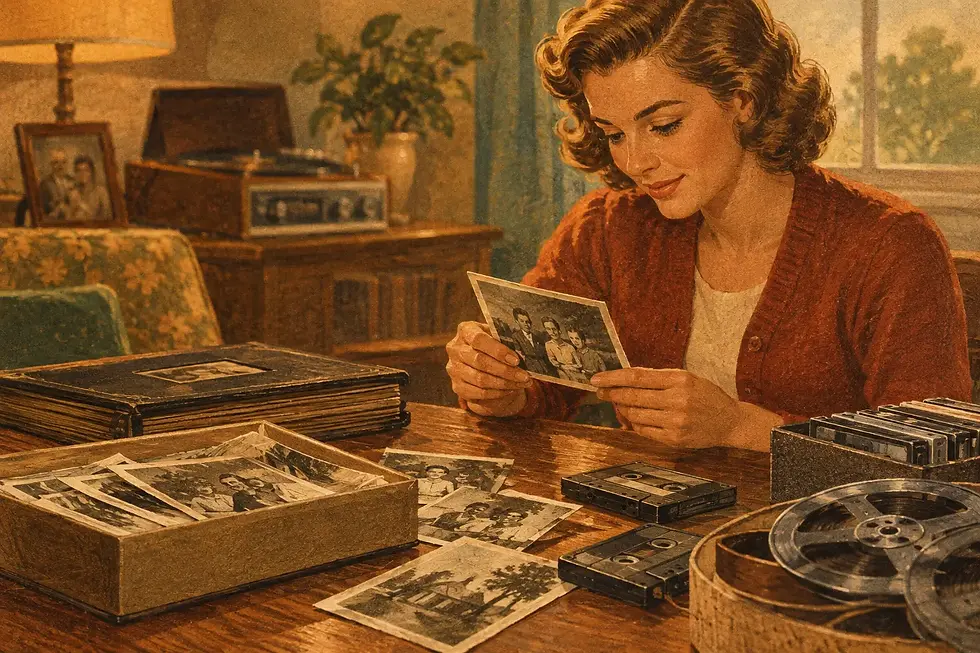
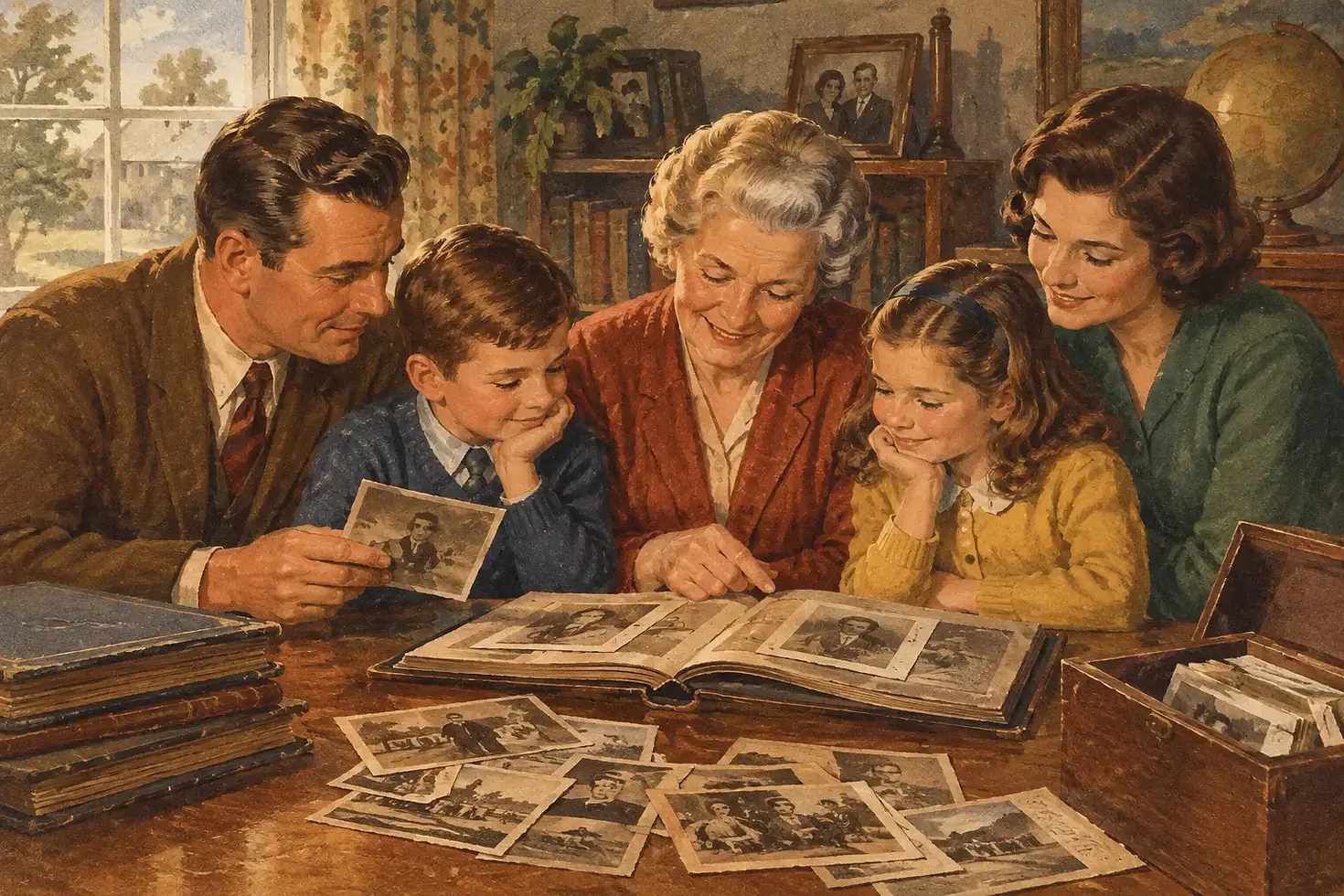
Photographs are often the easiest place for a family to start. They invite stories almost immediately: “That was the summer at the lake,” or “Your uncle thought that haircut was a fine idea.” A well-organized photo book can preserve milestones, everyday scenes, handwritten captions, and the faces that might otherwise remain unidentified.
The key is not to let the photos do all the talking. Add names, approximate dates, locations, and short captions while someone still knows them. Even a sentence or two beside an image can save future relatives from guessing.
A photo book is ideal when the visual record is especially strong or when a family wants a gift that children can enjoy right away. Its limitation is that it can leave deeper stories untold unless captions and short memories are included.
A genealogy or family tree book
A family tree book brings order to the branches. It may include birth, marriage, and death information; migration records; military service; old documents; cemetery photographs; and brief biographies. This format is particularly satisfying for the family historian who has spent years gathering records and wants to place that work in a form others can understand.
Accuracy matters here. Names can be repeated across generations, records can conflict, and family stories sometimes grow a little taller with every retelling. A careful genealogy book can distinguish between documented facts, family tradition, and questions that remain unanswered.
This format is excellent for reference, but it can feel dense if it contains only charts and dates. Consider adding a few first-person memories, photos, and short profiles. The records tell descendants where they came from. The stories help them understand who those people were.
A full family history manuscript
A larger family history gathers several branches, generations, and voices into one substantial work. It might trace an immigrant ancestor, follow the movement of a family through different regions, and include stories from multiple relatives. This is the right format when the goal is a broad legacy rather than a single person’s memoir.
It is also the most involved option. Someone must make decisions about structure, verify details, choose photographs, and decide which stories belong. That effort can be deeply worthwhile, especially for a reunion, anniversary, or multi-generation gift, but it benefits from patient editorial guidance.
For a large project, begin with a clear question: What should a great-grandchild understand after reading this? The answer keeps the book from becoming a pile of interesting material with no path through it.
Choosing the Right Format for Your Family
Start with the storyteller, not the technology. If your father lights up when he talks about his Navy years but avoids email, a spoken life-story interview may be a better fit than a do-it-yourself writing platform. If your aunt has carefully labeled photographs from six decades, a photo-centered book may be the natural starting point.
Next, consider the family’s purpose. Are you trying to preserve a parent’s memories while you still can? Give younger relatives a sense of belonging? Organize years of genealogy research? Create a meaningful gift for a milestone birthday? The purpose usually points toward the format.
It also helps to think in layers. A concise life-story book can be more likely to be read than a 300-page volume, while a longer digital archive can hold additional photographs, documents, and recordings for relatives who want to go deeper. Not every memory must fit between the same two covers.
Finally, choose a process that feels respectful. Families should not have to hand an older loved one an app, a password, and a list of prompts, then hope for the best. A good legacy project gives the storyteller time, a real listener, and the reassurance that someone else will handle the recording, organizing, editing, and production.
A Format Can Preserve More Than Facts
At Heritage Circle, the aim is not to turn someone’s life into a generic questionnaire. It is to create a lasting record through personal conversation, careful transcription, light editorial shaping, a color PDF book, and audio that family members can revisit through QR codes. For families who want printed copies, hardcover books can provide the familiar weight of an heirloom on the shelf.
The format matters, but so does the experience of making it. A person who feels heard often remembers more. A daughter listening nearby may hear a story for the first time. A grandchild may later scan a code and hear a voice that brings the printed page to life.
The best time to choose a family history format is not after every detail has been organized. It is when someone you love is ready to tell a story. Begin there, with one memory and one patient conversation, and let the family history grow from a real human voice.