12 Family Tree Book Ideas That Feel Personal

A family tree can begin with a few names on a page, but the best ones do much more. They help a child understand where her freckles came from, remind a grandson that his great-grandfather repaired railroad engines, or preserve the story behind the recipe everyone asks for at Thanksgiving. These family tree book ideas are meant to turn genealogy into something warmer: a book people will actually open, read, and pass around.
You do not need every date, document, or distant cousin before you begin. A meaningful family history can be wonderfully incomplete. What matters most is giving the names you know a little context, a few photographs, and the stories that make them feel like people rather than entries on a chart.
Family Tree Book Ideas for a Living Family History
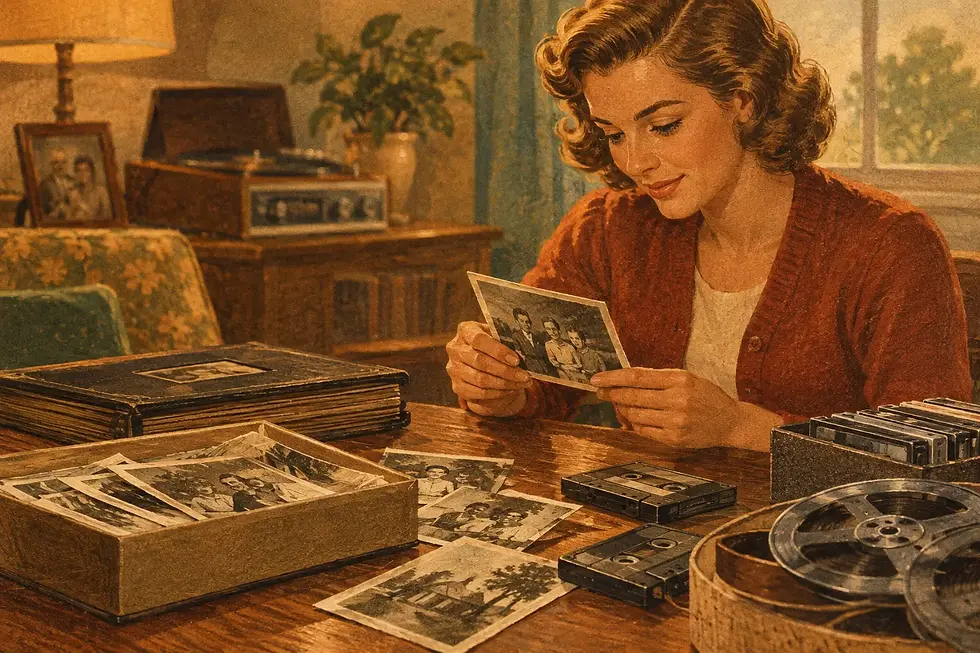
1. Build the book around one couple
Rather than starting with every branch at once, begin with the two people whose lives hold the family together: perhaps your parents, grandparents, or great-grandparents. Tell how they met, where they made their home, what work they did, and what they valued.
Their children, grandchildren, and great-grandchildren can follow from there. This approach gives the book a natural center and keeps an ambitious project from becoming overwhelming.
2. Pair each branch with a short story
A traditional tree chart is helpful, but a chart alone rarely holds someone’s attention for long. Beside each family branch, add a short story: the move from a farm to a city, the service member who came home and opened a hardware store, or the aunt who could make any visitor feel expected.
Even three or four sentences can change the feeling of a page. If you are unsure what to include, ask, “What would I want a great-grandchild to know about this person?” The answer is usually more useful than a list of dates.
3. Create a family homeplaces chapter
Families are shaped by places. A chapter organized around homes, towns, neighborhoods, farms, or countries of origin can make the tree feel grounded. Include an old house photo if you have one, along with a present-day image or a simple map.
You might describe the front porch where everyone gathered, the corner store your father walked to as a boy, or the first home a young couple could finally afford. Addresses may change, but the memories attached to them often remain remarkably clear.
4. Tell the story through family photographs
A photo-based tree book works especially well when pictures are plentiful but names and dates are less certain. Organize images by generation, by family branch, or by decade. Caption what you know, even if it is only “Sunday dinner at Grandma Rose’s house, around 1965.”
Do not wait until every photograph is perfectly identified. Leaving a gentle note such as “We believe this may be Uncle Frank” is better than allowing a valuable image to stay hidden in a box. Future family members may recognize the face and fill in the missing piece.
5. Include the recipes that carry a memory
Recipes belong in family tree books because they often preserve far more than food. A handwritten card for pecan pie can bring back a particular kitchen, a holiday, and the person who always insisted on serving a second helping.
Place the recipe beside the cook’s photograph and a few words about their life. If measurements were never written down because someone cooked “until it looks right,” say so. That is part of the inheritance too.
6. Make room for work, service, and everyday skills
Not every family story needs to be dramatic to be worth keeping. The quiet details of how people earned a living tell future generations a great deal about their character. Include uniforms, business cards, workshop photos, military service memories, church programs, or a description of a trade.
A family may not know every ancestor’s full life story, but they may remember that Grandpa drove a bread truck before dawn, or that Nana mended clothing for neighbors during lean years. Those details have a way of staying with readers.
7. Add a “things they used to say” page
Every family has expressions that would puzzle an outsider and instantly make relatives smile. A page of sayings, nicknames, favorite jokes, and bits of advice gives a book its own voice.
This section is also a lovely place for small memories from several people. One person may remember a grandmother’s warning before a road trip; another may remember the phrase a father used whenever things went wrong. Together, those lines become a portrait.
8. Preserve a voice along with the written page
A written story is precious. Hearing it in someone’s own voice is different. When possible, record a parent or grandparent telling one or two favorite memories, then place a QR code in the book that lets family members listen.
There is no need for a polished performance. A laugh, a pause while remembering, or the familiar way someone says a name can be as meaningful as the story itself. At Heritage Circle, spoken interviews can be shaped into a professionally formatted book while preserving audio for the family to hear later.
9. Use a timeline when the family history is complex
A timeline can quietly bring order to a book with many generations or several moves across the country. Put major family events alongside wider events that influenced them: a war, the Great Depression, a local factory opening, or a move made for work.
Keep it simple. The goal is not a history textbook. It is to help readers see why a family left one place, settled in another, or made choices that shaped the generations that followed.
10. Let children and grandchildren contribute
A family tree book does not have to speak only in the voice of the oldest generation. Ask grandchildren to write a few sentences about a favorite memory, draw a picture of a relative’s home, or answer what they hope to carry forward from the family.
These contributions make the book feel active rather than finished and sealed away. They also remind everyone that a family tree grows in both directions: back into history and forward into the lives still unfolding.
11. Include a heritage and traditions section
If your family has roots in a particular region, culture, faith tradition, or immigrant community, give that heritage room on the page. This may include holiday customs, music, language, foods, stories of arrival, or the values that were emphasized at home.
Be honest about what is known and what is not. Families sometimes feel pressure to make every heritage story tidy. It is perfectly fine to say, “This is what we have been told,” or “We are still learning more about this branch.” Careful uncertainty is more respectful than a confident guess.
12. Leave pages for the next generation
A family tree book becomes more useful when it invites continuation. End with blank or lightly guided pages for future births, marriages, memories, and photographs. Include space for a child to write about a grandparent or for a family member to add a newly discovered ancestor.
A hardcover keepsake may feel permanent, but the family story is not. Leaving room is a small, hopeful way to acknowledge that.
A Few Choices Before You Start
The best format depends on what your family has and what you hope the book will do. If you have strong genealogy research, a detailed chart and timeline may be central. If records are limited but stories are rich, begin with interviews and photographs. If several relatives are contributing, choose one person to gather materials and make final decisions so the project keeps moving.
It also helps to decide early whether the book is mainly for private family enjoyment or whether it should serve as a research record for future generations. A research-focused book may include full names, dates, sources, and locations. A more personal keepsake may protect privacy by leaving out information about living relatives and focusing on memories instead. Many families find that a blend of both feels right.
Start with the person who is easiest to talk with, the photo that makes everyone pause, or the story you would be sorry to lose. One remembered afternoon can be enough to begin a book that gives your family a stronger sense of where it comes from - and a gentler way to carry that history forward.