15 Best Gifts for Aging Parents That Truly Last

A new blanket may warm your parent for a season. A framed family photo may make them smile every time they pass it. But the best gifts for aging parents often do something more lasting: they make everyday life easier, remind them they are seen, or help them pass along what only they know.
That is a useful standard when shopping for a parent who insists they "don’t need a thing." They may not need another gadget, novelty mug, or object that requires an instruction manual. What they may welcome is comfort, connection, a little practical support, and the reassuring feeling that their place in the family is deeply valued.
Start with the gift behind the gift
Before choosing something, think about what has changed in your parent’s life lately. Have they stopped driving at night? Are their hands less steady? Have they become more home-centered, more social, or perhaps a little isolated? Are they the keeper of every family story, photo, and recipe?
A good gift answers a real part of that picture. It does not need to announce itself as a solution. In fact, the most appreciated gifts often feel gracious rather than corrective. A magnifying lamp says, “I thought you might enjoy your reading.” A meal delivery says, “You deserve a night off.” A legacy book says, “Your life matters, and we want to remember it in your own words.”
Best gifts for aging parents who value comfort
Comfort gifts work best when they are genuinely pleasant to use and simple to care for. Skip anything overly fussy, especially if it needs charging, pairing, updating, or a small booklet of instructions written in six-point type.
A well-made throw or lap blanket
A soft, washable blanket is humble but beloved, particularly for parents who read, watch television, or rest in one favorite chair. Choose a comfortable weight rather than something so heavy it is difficult to move. If warmth is the goal, look for a reliable fabric and an easy-care label, not just a fashionable pattern.
Supportive slippers or an easy-on robe
The right pair of slippers can be a daily kindness. Look for non-slip soles, a stable fit, and a back that does not collapse underfoot. If your parent has mobility or balance concerns, avoid treating footwear as a casual gift. Fit and safety matter more than a clever design.
A robe can be equally welcome, especially for someone who enjoys slow mornings. Consider their usual routine. A lightweight robe is better for a warm house; a plush one may be perfect for a parent who is always reaching for another layer.
A reading lamp or magnifier
Many parents continue reading avidly but find dim print and shadowy corners frustrating. A quality adjustable lamp can make books, crossword puzzles, knitting, and paperwork easier without making the gift feel medical. A handheld or stand magnifier may help as well, though it is wise to choose a style that feels comfortable to hold.
Gifts that make the day a little easier
Practical gifts can be deeply loving when they remove a chore or preserve independence. The key is tact. No one wants to feel managed by their adult children. Frame the gift around enjoyment, convenience, or a shared experience.
Prepared meals and grocery help
A gift certificate for prepared meals, a favorite local restaurant, or grocery delivery can be a welcome relief. This is especially thoughtful after an illness, a move, the loss of a spouse, or a busy holiday season. It also works well for parents who are perfectly capable but tired of deciding what to make every evening.
If you are arranging recurring delivery, ask first. Some people appreciate the convenience; others care strongly about choosing their own produce, brands, and delivery times. A one-time meal basket can be a gentler place to start.
Help with the house, yard, or repairs
A few hours of housekeeping, seasonal yard work, window cleaning, or a trusted handyman can be far more useful than another decorative item. Choose a provider you would feel comfortable using in your own home, and make sure your parent knows when to expect them.
This gift is not glamorous, but it can relieve a burden they have been quietly carrying. Better yet, pair the service with your own visit. Help is warmer when it comes with company.
A simple digital photo frame, set up for them
Digital photo frames can be wonderful when the family does the setup. Load it with familiar faces, label the frame clearly, and make sure your parent knows the one or two things they may need to do. If they are wary of technology, the gift should arrive ready to enjoy, not become a weekend project.
For some families, a printed photo album is the better choice. It never needs Wi-Fi, and it can be passed around at the kitchen table. The right answer depends on your parent, not what happens to be trendy.
Gifts that create more time together
Sometimes the best present is a reason to be together without rushing. This matters especially when visits have become shorter, conversations feel repetitive, or everyone is trying to put down their phones and be present.
Consider tickets to a matinee, a museum membership, a local concert, or a favorite team’s game. A restaurant outing can be lovely, but do not underestimate a planned afternoon at home with their favorite lunch and no agenda. The point is not to fill the calendar. It is to make a memory while there is still time to make one.
A subscription can serve the same purpose if it reflects who they are: a magazine they will actually read, flowers arriving through the winter, a monthly puzzle, or a book selected with their interests in mind. Avoid subscriptions that create clutter or pressure them to keep up.
The gift that preserves what cannot be replaced
As parents age, families often realize that the most valuable things are not the things in the house. They are the stories behind them. Why did Grandma leave Kentucky at nineteen? How did Dad meet Mom? What was it like to grow up during the war, raise children in a first home, build a business, survive a hard season, or find joy after loss?
Those stories are easy to postpone. Then a birthday passes, a holiday becomes busy, and the questions remain unasked. A personal history project turns that vague wish into something real: a conversation, a record, and a keepsake that children and grandchildren can return to.
A recorded story and legacy book
For a parent who has lived a full life but does not want to write a memoir, a guided interview can be an especially meaningful gift. They do not need to type, learn an app, or stare at a list of prompts alone. They simply need someone patient enough to listen.
Heritage Circle helps families preserve spoken memories through personal phone interviews, careful transcription, light editorial shaping, and a professionally formatted color PDF book. The finished project can also include audio through QR codes, so future generations can hear the voice behind the story. That detail matters. A written memory is precious; hearing a parent laugh, pause, or tell a familiar story in their own cadence is something else entirely.
This kind of gift is not only for a parent who has had a headline-worthy life. Ordinary family life is where much of our inheritance lives: Sunday dinners, first jobs, neighborhood friendships, sayings everyone remembers, lessons learned the hard way, and the small choices that shaped a family.
Photo restoration or a family album project
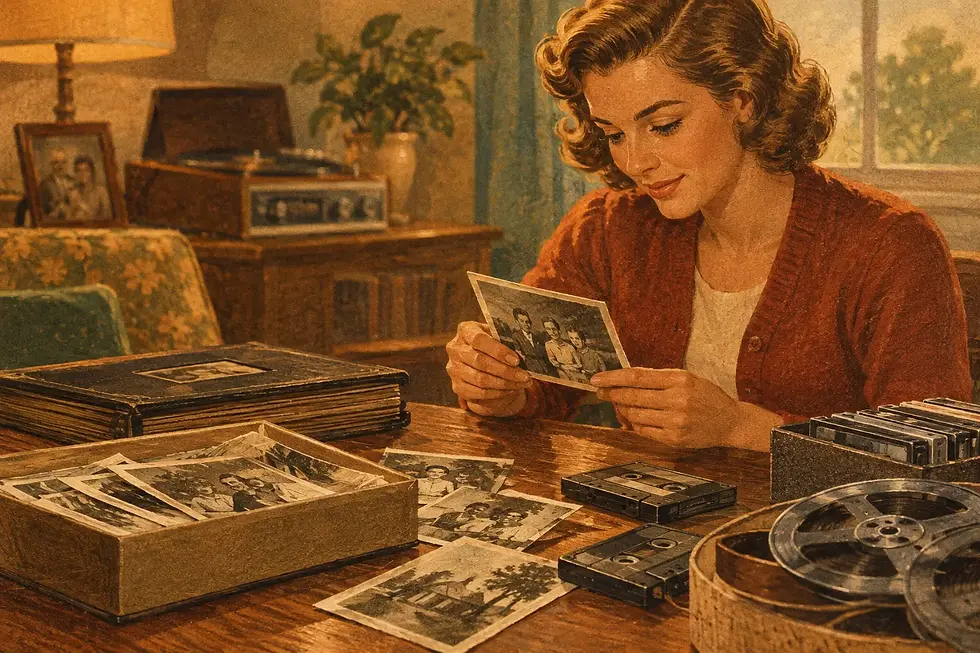
Old photos are another form of memory waiting for attention. Many parents have boxes filled with pictures that no one has labeled and few people have seen. Restoring selected photos, organizing them into an album, or creating a family history book can bring those images back into the center of family life.
It is best to begin modestly. Choose a meaningful set rather than trying to solve every box in the attic at once. A project built around a wedding, military service, childhood home, or grandparent’s early years can feel manageable and deeply personal.
How to give a meaningful gift without making it awkward
The presentation matters. If the gift relates to support, mobility, memory, or health, avoid making it sound like a response to decline. Lead with affection and attention. “I saw this and thought it would make your evenings more comfortable” lands differently than “You need this.”
For a story-preservation gift, invite rather than pressure. You might say, “I would love for the kids to know more about your childhood and how you and Mom built this family. Would you be open to talking with someone who can help capture it?” Let your parent decide what belongs in the story. Their voice, their boundaries, and their version of events deserve respect.
The most meaningful gifts do not have to be expensive or elaborate. They simply tell a parent, clearly and kindly: I know you. I notice what you carry. I want more of your comfort, your stories, and your presence in our family for as long as we are lucky enough to have it.