
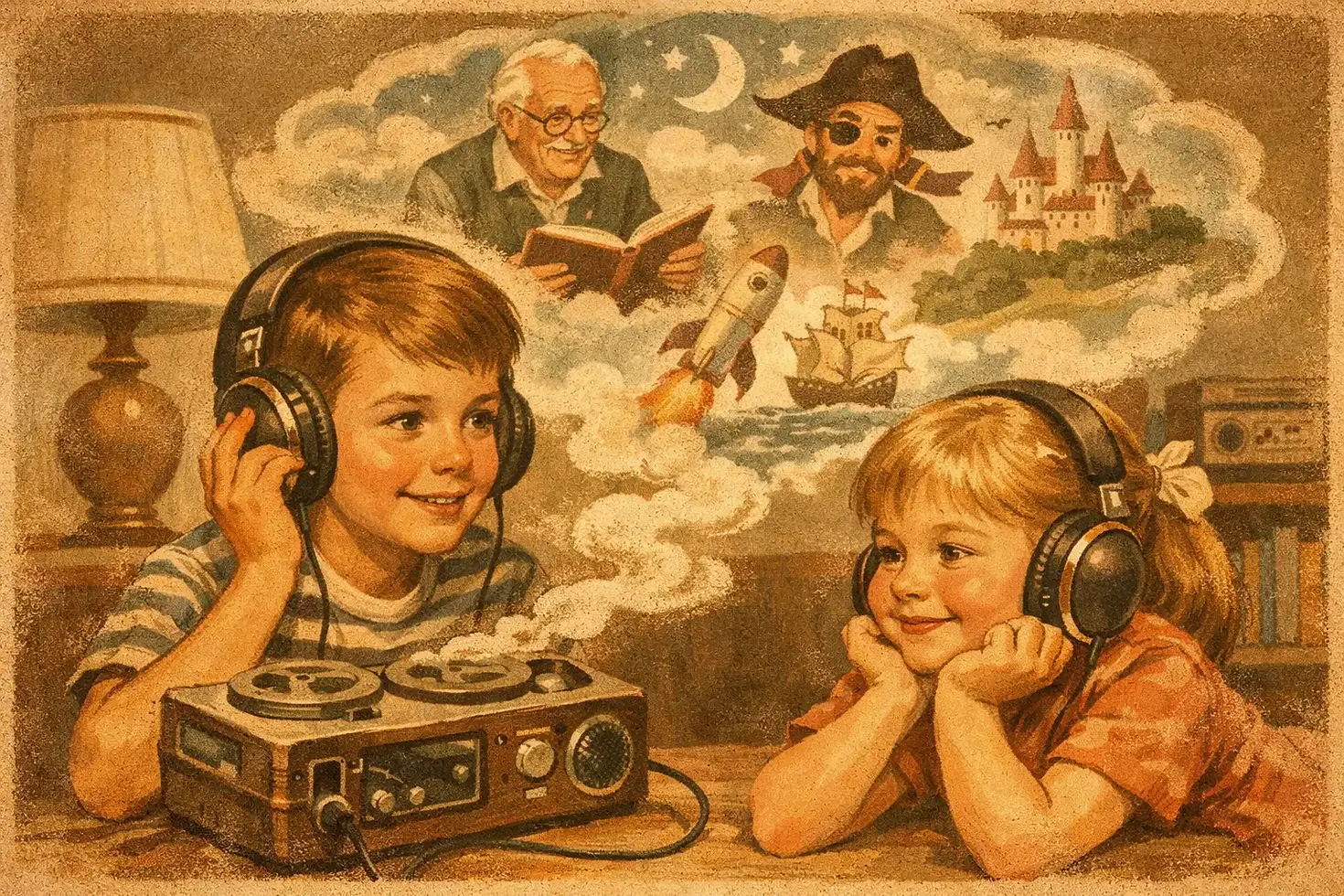
Can Grandchildren Access Audio Stories Easily?

A grandchild may know that Grandpa served in the Navy or that Grandma grew up above her parents’ grocery store. But hearing them tell it - the pause before the punch line, the laughter, the familiar way they say a family nickname - is something else entirely. So, can grandchildren access audio stories in a way that feels simple now and still meaningful years from now? Yes, when the stories are prepared for real family use rather than left buried on one person’s phone.
For many families, the best answer is not a complicated app or a folder full of files with mysterious names. It is a clear, private place to listen, a printed book that explains what is there, and an easy path from page to voice. The goal is not merely to save a recording. It is to make a loved one’s voice available when a child is curious, when a family is gathered at the kitchen table, or when someone wants to hear it again after many years.
Can Grandchildren Access Audio Stories Without Technical Trouble?
They can, provided access is designed around ordinary family habits. Most grandchildren and adult children already know how to use a phone camera. A QR code printed in a legacy book can take them directly to a recording or a private family page, without asking them to install software, remember a password, or search through old emails.
That small bit of simplicity matters. A recording that requires three logins and a forgotten account may as well be stored in a box in the attic. A recording connected to a page in a book is an invitation: scan here and listen to the story behind this photograph, this military service, this first home, or this family recipe.
At Heritage Circle, spoken interviews are shaped into a readable color PDF book, with audio access available through QR codes and a private shareable web page. The book gives the story a physical home. The audio gives the words their original warmth. Together, they make it easier for a grandchild to move from reading, “My father taught me to drive in a pickup truck,” to hearing the storyteller describe the dented fender and the nervous first turn onto the road.
What Makes Audio Access Work for a Family?
The answer is less about fancy technology than thoughtful preparation. Audio stories work best when they are organized, clearly labeled, and connected to the written story. A grandchild should not have to guess whether “Recording07FINAL_revised” contains the story about a wedding, a childhood pet, or a difficult chapter in the family’s history.
A private page gives the recordings a clear home
A private family page can hold the audio in one understandable place. Rather than passing a large audio attachment from phone to phone, family members can visit the same page whenever they want to listen. This is especially helpful when several grandchildren live in different states, or when a family wants to share stories after a birthday, reunion, or funeral without sending personal recordings across social media.
Privacy deserves a little thought here. Some storytellers are comfortable sharing every memory widely. Others want the stories reserved for relatives, at least for now. A private page creates a gentle middle ground: the stories are shareable with the people who matter, without being made public by default.
QR codes connect the book to the voice
A QR code is not a replacement for the book. It is a bridge between the page and the person. When a grandchild sees a chapter about a grandmother’s early years, the nearby code can lead to her actual interview. The printed words provide context; the voice brings back personality.
There is one practical trade-off. QR codes require a device with a camera and an internet connection. That is usually easy for younger family members, but it is wise to keep the written transcript in the book as well. If someone is on an airplane, in a rural area with weak service, or simply prefers reading, the story is still there.
Clear labels make a difference years later
Families often underestimate how quickly details fade. A label such as “Grandma Rose - Childhood in St. Louis, 2026” is much more useful than “Audio 2.” It tells future listeners whose voice they are hearing, what the conversation covers, and when it was recorded.
It also helps to distinguish between a complete interview and short excerpts. A grandchild may enjoy a two-minute story about meeting a future spouse, while an adult child may want to sit down with the full interview one quiet afternoon. Both are valuable. They simply serve different moments.
Why the Voice Matters Alongside the Written Story
A transcript preserves the content of a memory. Audio preserves the person telling it. Those are not identical things.
A sentence on paper cannot fully capture the gentle hesitation before someone speaks about a lost sibling. Nor can it capture the delight in a grandfather’s voice when he remembers the first time he held his own child. Even imperfect speech - the side comments, the little chuckle, the moment someone says, “Oh, I haven’t thought about that in years” - often becomes the most cherished part.
This does not mean every raw minute needs to be shared. A thoughtful editor can lightly shape the written version for clarity while preserving the speaker’s natural voice in the audio. The result feels dignified, not polished into someone else’s memoir. That balance is particularly important for older adults who worry that they are “not good at writing” or that their stories are too ordinary to record. Ordinary family life is exactly what later generations are often hungry to know.
Planning for Access Beyond This Year
The honest answer to long-term digital access is that no one can promise a particular website, phone model, or QR scanning habit will remain unchanged forever. Technology moves along whether anyone asked it to or not. That is why a good preservation plan uses more than one format.
The printed book offers a lasting, human-readable record. A downloadable PDF provides another copy that can be kept by several family members. A private web page makes listening convenient. Long-term digital preservation through the Internet Archive adds another layer of protection for materials intended to endure.
Redundancy is not glamorous, but it is loving. If one family member changes email addresses, another still has the book. If a grandchild discovers the story decades later, the text identifies what they have found. If a QR code is no longer the easiest route someday, the underlying audio and written record still matter.
Families can also make access part of their own tradition. A parent might play one recording on a grandparent’s birthday. Cousins might listen to a short clip at a reunion. An older grandchild might be invited to choose a favorite story and explain why it stayed with them. These small rituals keep a legacy book from becoming a beautiful object that is rarely opened.
A Few Questions Families Often Ask
Do grandchildren need an account to listen?
They should not need one for ordinary access. The easier the listening experience, the more likely young family members are to use it. A direct private page and QR codes reduce unnecessary steps.
Can audio be shared with relatives who do not own the book?
Yes. A private shareable page allows relatives to listen even if they live far away or have not yet received a printed copy. The book remains a wonderful gift, but it does not have to be the only doorway to the stories.
What if a grandchild is too young to use a phone?
That is often when the stories are most powerful. A parent can scan the code and play a short recording at bedtime, during a car ride, or while looking through family photographs. Years later, that same child can return to the book and listen independently.
The best time to make a loved one’s voice accessible is while you can still ask the next question, laugh at the unexpected detail, and say, “Tell me more about that.” A well-kept audio story gives grandchildren a way to hear where they came from. More importantly, it gives them a way to keep company with someone they love.


