The Importance of Family Heritage

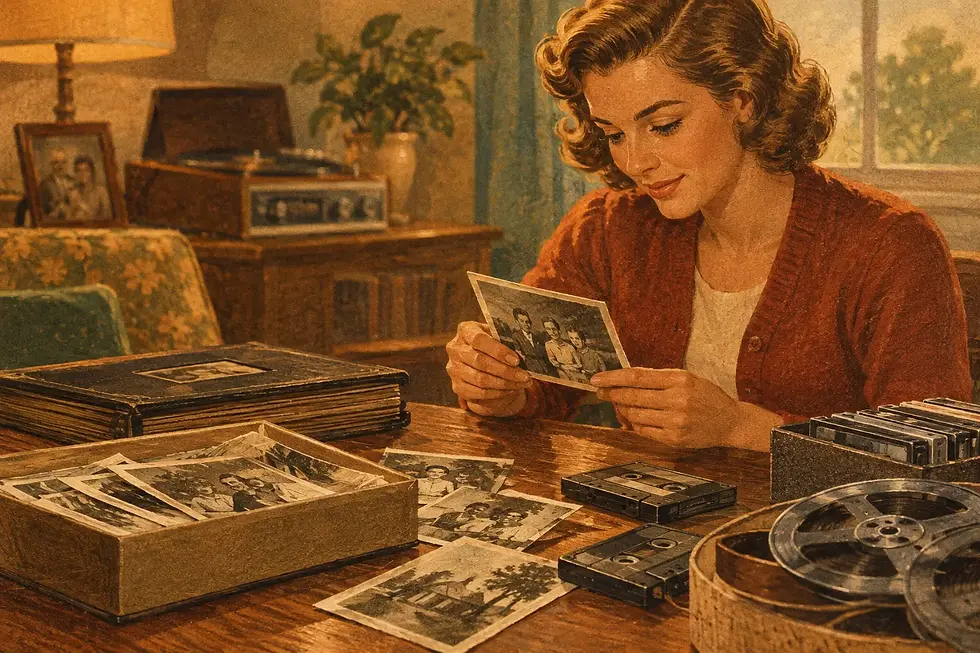
A box of old photos can tell you who was there. A family story tells you who they were.
That is the real importance of family heritage. It is not just a record of names, birthdays, military service, or where someone lived in 1958. It is the thread that helps children, grandchildren, and even great-grandchildren understand what kind of people they come from, what was carried forward, and what should not be lost.
For many families, heritage lives quietly in recipes, sayings, work habits, faith, music, and the way someone tells a story at the dinner table. The trouble is that these things can disappear faster than anyone expects. One move, one funeral, one hard drive failure, and decades of memory can become a handful of loose facts with no voice behind them.
Why the importance of family heritage grows over time
Family heritage often matters more as the years pass, not less. When everyone is busy raising children, working, and keeping up with daily life, it is easy to assume the stories will always be around. Then one day the person who knew how the family came to this country, why Grandpa never talked about the war, or how your mother learned to be so resourceful is no longer here to ask.
That is when families feel the gap. Not because they need perfect history, but because they miss context. Heritage gives context to the people you love. It explains why your family values education, why generosity mattered so much to your parents, or why a certain holiday meal feels almost sacred.
This is one reason older adults are often the keepers of something precious. They do not just remember events. They remember texture. They can tell you what the neighborhood smelled like in summer, what jobs were available, what people feared, what they celebrated, and what had to be overcome. Those details are what turn a timeline into a living inheritance.
Family heritage gives people a stronger sense of identity
Most people want to know where they belong. Not in an abstract way, but in a human way. They want to know what shaped their family and what values were earned, tested, and passed along.
A child who hears, "Your grandmother started over with almost nothing," learns more than a fact. They learn resilience has a history in their family. A grandchild who hears, "Your grandfather treated everyone with respect because he knew what it felt like to be overlooked," receives a moral lesson rooted in a real life, not just a slogan.
That is part of the importance of family heritage - it gives people a way to see themselves as part of a longer story. This can be grounding, especially during seasons of change, grief, or uncertainty. It reminds people they come from somewhere, and that somewhere includes both struggle and strength.
Of course, not every family story is easy. Some histories include estrangement, loss, poverty, addiction, migration under pressure, or painful silence. Heritage is not valuable because it is tidy. It is valuable because it is true. Honest family history can help the next generation understand not only what was admirable, but also what patterns may need to end.
Stories carry values better than instructions do
Most families hope to pass down values like hard work, kindness, faith, loyalty, humor, or courage. The challenge is that values rarely stick when they are delivered as lectures. They stay with people when they are attached to story.
A story about a mother stretching one paycheck to feed a full house says more about sacrifice than a hundred reminders to be grateful. A story about an uncle who kept showing up for neighbors during hard times says more about service than a framed quote on a wall.
This is where heritage becomes deeply practical. It does not only preserve the past. It helps shape the character of the future. When younger family members hear how earlier generations faced disappointment, illness, financial hardship, or major change, they gain examples they can actually use.
Just as important, spoken stories carry emotion in a way written notes often do not. The pause before a difficult memory, the laugh after an old family mishap, the tenderness in someone's voice when they mention a parent who has been gone for years - these things matter. They help the next generation receive not just information, but presence.
Heritage strengthens family connection
Families are not held together by shared DNA alone. They are held together by shared meaning.
When relatives know the same stories, they tend to feel more connected to each other. A cousin becomes more than a name on a holiday card when you know your fathers worked side by side as teenagers. A grandparent becomes more than "the quiet one" when you learn what they survived and how much they carried without complaint.
This kind of connection can be especially meaningful in families spread across states, blended across marriages, or separated by age. Heritage gives everyone a common point of reference. It says, "Here is who we are. Here is what we have been through. Here is what still belongs to all of us."
There is a trade-off here, though. Heritage can bring families closer, but only when it is handled with care. One person's treasured memory may be another person's difficult chapter. That is why preserving family stories is not only about gathering material. It is also about listening respectfully, allowing complexity, and resisting the urge to polish every rough edge away.
Why preserving family heritage takes more than saving photos
Photos matter. Documents matter. Family trees matter. But by themselves, they are often incomplete.
A wedding portrait shows a couple standing still in their best clothes. It does not tell you they had to postpone the ceremony because of a snowstorm, or that the ring was borrowed, or that they laughed through the entire day because nothing went as planned. A census record may confirm an address. It will not tell you what it felt like to grow up in that house.
That is why preserving heritage works best when stories, voices, and images are kept together. The richest family records do more than prove a fact. They let future generations hear personality, understand relationships, and feel a little closer to people they may never have met.
For many older adults, this is also the difference between a project that feels overwhelming and one that feels possible. Writing a memoir alone can sound exhausting. Learning new software can be frustrating. Recording yourself into an app may feel awkward or impersonal. A guided conversation is often easier, more natural, and more faithful to the way people actually remember.
That is one reason services like Heritage Circle resonate with families who want a real person to help gather stories and shape them into something lasting. The process feels less like homework and more like being heard.
The importance of family heritage for future generations
The people who will value your family heritage most may not be the ones sitting at your table today. They may be children not yet born.
That can be hard to picture, but it is worth considering. A story preserved now may become a source of comfort decades from today. A granddaughter may someday want to hear how her great-grandmother handled widowhood. A teenage boy may need to know that the steady grandfather he admired once felt lost too. A future parent may reach for old family stories when trying to explain identity and belonging to their own child.
What gets preserved now becomes a gift later. Not because every memory is dramatic, but because ordinary lives carry wisdom. The routines, decisions, jokes, disappointments, and small acts of devotion are often what descendants cherish most.
Many people wait because they think they need a remarkable life story. They do not. The person who worked hard, loved deeply, made mistakes, kept going, and showed up for family already has a story worth saving. In truth, those are often the stories families hold closest.
If there is a best time to preserve family heritage, it is usually sooner than feels necessary. Memories fade unevenly. Details go first, then voices, then the chance to ask one more question. A simple conversation today can become something your family returns to for generations.
Start with the stories only one person can tell. Ask about childhood, first jobs, marriages, moves, hardships, friendships, and the values behind the choices. Keep the voice, not just the facts. What your family will treasure later is not a perfect historical record. It is the feeling of hearing someone they love say, in their own words, "Here is what my life was like, and here is what I hope you carry forward."