Parent Story Preservation That Feels Personal

The stories families miss most are rarely the polished ones. They are the details that seem ordinary while a parent is still here: the first car they drove, the job they took because it was nearby, the meal they made when money was tight, the neighbor everyone knew by nickname. Parent story preservation gives those memories a place to live before they become questions no one can answer.
For many families, the intention is already there. Someone says, “We should record Mom telling that story,” or “Dad ought to write this down.” Then life gets busy, the recorder stays in a drawer, and the blank page feels larger than it should. A meaningful legacy does not require a parent to become an author, learn new software, or spend evenings clicking through prompts. It begins with a good conversation and someone patient enough to listen.
Why parent story preservation matters now
A parent’s life is more than a timeline of births, schools, jobs, and addresses. It is a record of how they made decisions, what they believed, whom they loved, and how they found their way through hard seasons. Children and grandchildren may know the broad outline, but they often do not know the texture of a life.
A simple question can bring that texture back: What did your house smell like when you came home from school? Who taught you to drive? What did your parents say when you told them you were getting married? These answers carry family history, but they also carry personality. The pause before a parent remembers. The laugh when a story takes an unexpected turn. The phrase they have used for forty years.
That is why preserving both the written story and the spoken voice can matter so much. A book gives a family something easy to hold, read, and pass around. Audio lets future generations hear the person behind the words. Neither replaces the other. Together, they feel more complete.
There is no perfect age to begin. Some parents are eager to talk at 65; others do not feel ready until their eighties. Some families start after a health scare, while others begin because a birthday or anniversary makes everyone pause. The best time is usually when there is enough room for unhurried conversation, not when the family is trying to gather memories in a rush.
The real obstacle is often the process
Most parents do not resist sharing their stories because they have nothing to say. They resist because the task sounds exhausting. “Write your memoir” can feel like homework with a very long deadline. A digital platform may promise simplicity, but it can still ask an older adult to manage passwords, respond to emailed prompts, upload photos, and make decisions about formatting.
For some people, that approach works well. A parent who enjoys writing, is comfortable with technology, and wants to work privately may prefer the independence of a do-it-yourself project. But it is not the right fit for everyone. It can leave a reluctant storyteller staring at a screen, wondering where to start.
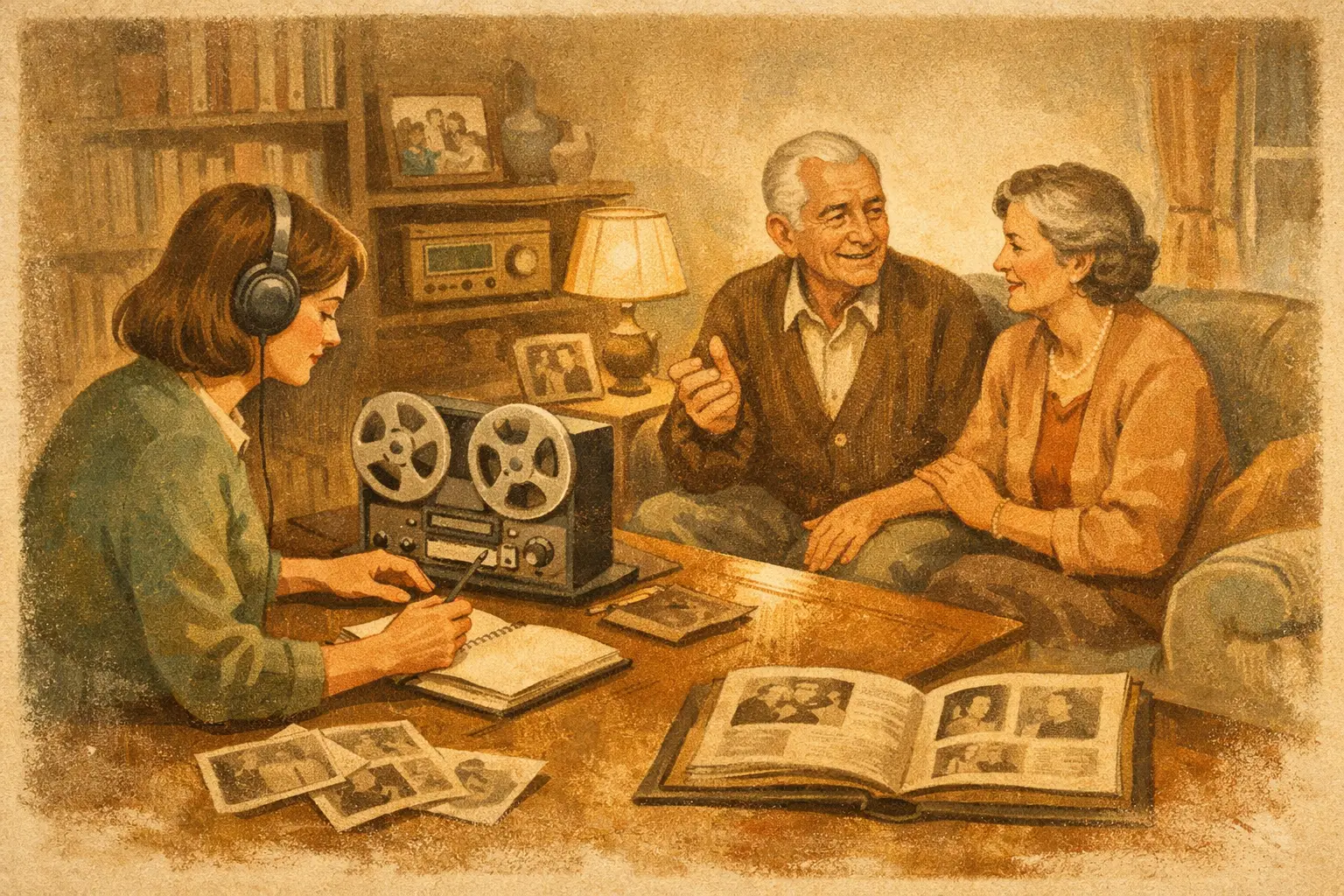
A guided interview changes the experience. Instead of asking a parent to produce a finished manuscript, it invites them to talk with a real person who knows how to ask a thoughtful follow-up question. A conversation has room for side roads. Sometimes the family’s favorite story appears only after a parent says, “Oh, that reminds me of something else.”
That human presence also removes a quiet pressure. Your parent does not have to remember every date correctly or tell a story in perfect order. The goal is not a courtroom record. It is an honest account of a life, shaped with care and presented in their own voice.
What a preserved parent story can include
A legacy book does not need to cover every year with equal weight. In fact, the strongest books usually make room for the moments that mattered most to the storyteller. One parent may want to spend an hour talking about growing up on a farm. Another may care most about military service, a long marriage, a career, a faith community, or the joy of raising children.
The story can include childhood memories, family traditions, courtship, work, moves, losses, proud moments, funny mishaps, and the lessons a parent hopes to leave behind. It can also make room for the small things: a favorite holiday recipe, the origin of a family saying, the first apartment, or why a particular song still brings tears to their eyes.
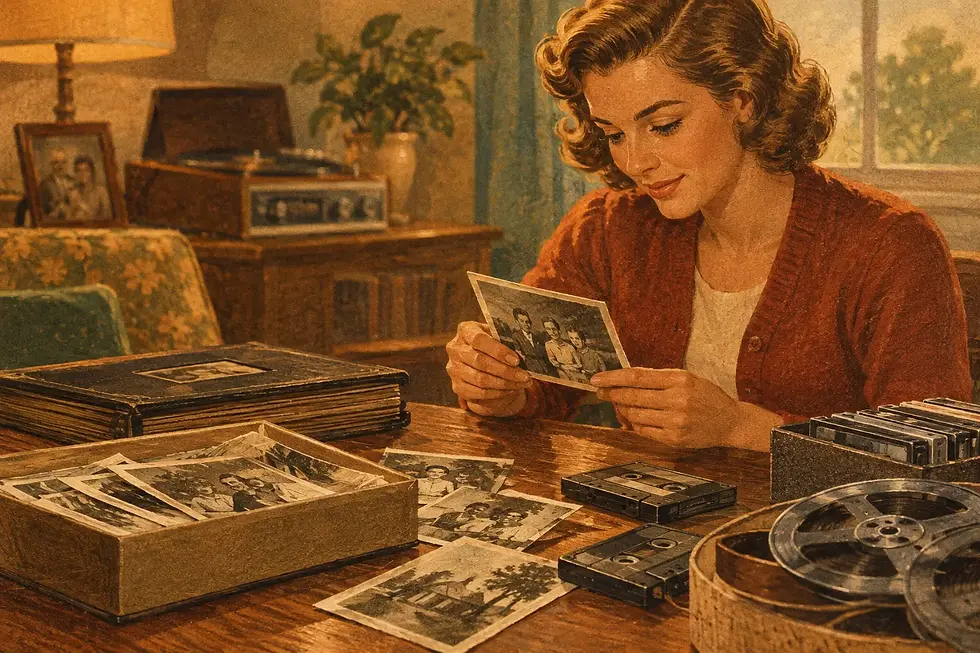
Photos add another layer, especially when they are given captions that explain who is pictured and what was happening. An unlabeled photo can be beautiful. A labeled photo becomes family knowledge. If older images are faded or damaged, restoration may be worthwhile, though it depends on the condition of the image and how central it is to the story.
Some families want a focused book centered on one parent’s memories. Others eventually expand into a larger project with a family tree, a photo album, genealogy research, or stories from several relatives. Starting small is not a compromise. It is often the gentlest way to begin.
A simple, respectful way to begin
Start by asking your parent whether they would enjoy talking about their life. Keep the invitation light. You are not asking them to perform or to have all the answers. You are saying that their memories matter to you, and you would like to make sure the family keeps them.
It helps to name one or two stories you already hope to hear. Perhaps you have always wondered how your parents met, what your father remembers about his first job, or how your mother learned to cook for a large family. Specific curiosity feels warmer than a broad request to “tell me everything.”
Then choose a format that matches your parent’s comfort. A phone interview is often easier than a video call, especially for someone who dislikes being on camera or worries about technology. A familiar voice on the other end of the line can make the conversation feel like a visit rather than an assignment.
Afterward, the spoken interview can be transcribed, lightly edited for clarity, and professionally formatted into a readable book. Light editing should preserve the storyteller’s way of speaking rather than sanding it down into something stiff. The best result still sounds like Mom or Dad. It is simply easier for others to read.
At Heritage Circle, the founder personally conducts the interviews and handles the production work, so families are not handed an app and told to figure it out. The finished project can include a color PDF book, audio access through QR codes, a private shareable web page, and long-term digital preservation through the Internet Archive. Families who want printed copies can choose hardcover books at cost.
Questions that bring out the stories behind the facts
Good questions do more than collect dates. They invite reflection. Rather than asking, “Where did you grow up?” try asking what the neighborhood felt like, who was always around, and what a summer day looked like there. Rather than asking only about a career, ask what work taught them and what they wish younger people understood about it.
A few gentle topics often lead to rich conversation: the people who shaped them, the turning points they did not expect, the traditions they hope continue, and the advice they would give their younger self. Leave room for silence. Memory does not always arrive on command, and a little patience can bring forward something precious.
Not every subject needs to be included. Families sometimes worry about painful chapters, old conflicts, or memories a parent would rather leave private. Their story belongs to them. A respectful preservation process makes room for honesty without demanding disclosure. The final book can be as candid, selective, funny, tender, or practical as the parent wishes.
Give the next generation more than names and dates
Years from now, a grandchild may open a parent’s story book looking for a school project, a family recipe, or a sense of where they came from. They may find something more lasting: the sound of a grandparent’s voice, a hard-won piece of advice, or a story that makes their own life feel connected to a larger one.
That is the quiet gift of preserving a parent’s story. It tells the people who come after us that their family was made of real people who worried, laughed, worked, loved, and kept going. A conversation started this week can become a familiar voice in the family for generations.