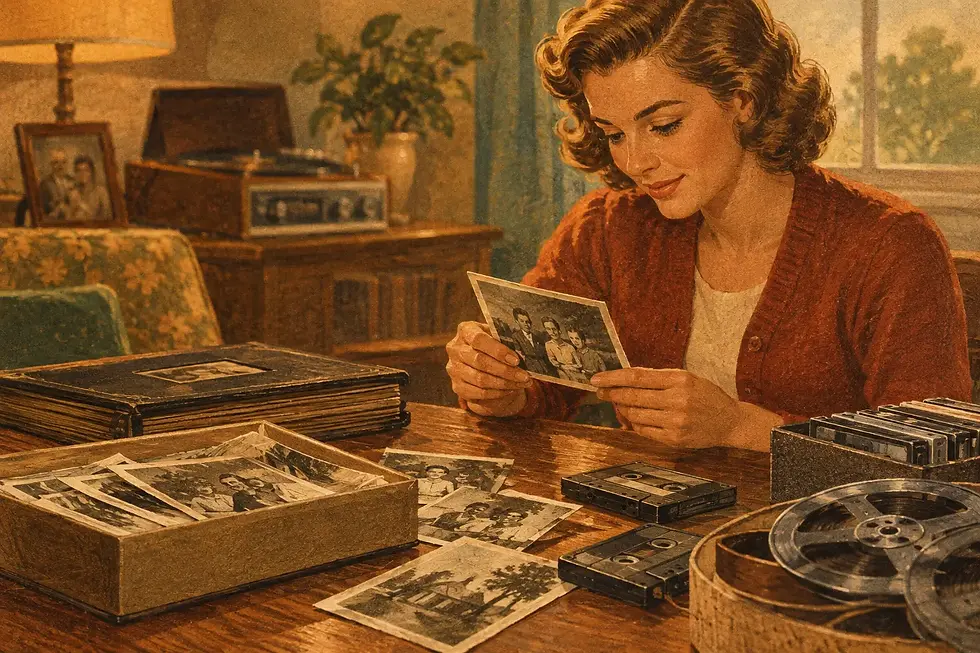
Legacy Gift Ideas That Keep a Voice Close

A sweater can be folded into a drawer. A favorite recipe can be copied onto a card. But the way your father tells the story of his first job, or the laugh your grandmother gives before sharing a family secret, is harder to hold onto. The best legacy gift ideas do more than mark an occasion. They help a family keep the person behind the occasion close.
For many older adults, the thought of “writing a memoir” feels like homework. For their children and grandchildren, the wish is simpler: Please tell us about your life while we can still ask. A meaningful legacy gift removes the pressure, makes room for conversation, and creates something the whole family can return to.
Why a Legacy Gift Means More Than a Keepsake
Traditional gifts are often enjoyed in the moment. A legacy gift continues working quietly over time. It gives grandchildren a way to know who their grandparents were before they became grandparents. It gives adult children details they may never have thought to ask about: the first apartment, the family traditions, the difficult season that changed everything, the advice learned the hard way.
The most lasting gifts usually preserve three things at once: the story, the personality, and the values beneath the story. A typed timeline of dates may be useful, but it will not capture the humor in a favorite saying or the pause before someone explains why faith, work, kindness, or family mattered to them.
That is why the right gift is less about buying an object and more about creating an experience. It says, “Your life is worth listening to.”
Legacy Gift Ideas for Parents and Grandparents
A recorded life-story interview
A guided interview is one of the most personal gifts a family can give. Rather than handing someone a blank journal with 200 questions, invite them into a real conversation with a patient listener. Questions can begin with childhood memories and move naturally through family, work, love, loss, turning points, and hopes for the next generation.
Recording the conversation matters because a voice carries details a written page cannot. Years from now, a grandchild may hear a familiar expression, a warm laugh, or the calm certainty in a loved one’s answer. Those small things are often what families miss most.
The trade-off is that an unedited recording can be difficult to revisit. It may be long, hard to search, or filled with interruptions. Pairing the audio with a thoughtfully edited written story makes the memories easier to read and share without losing the sound of the speaker’s voice.
A professionally made legacy book
A legacy book turns spoken memories into a clear, dignified story that can sit on a coffee table or be passed around at a holiday gathering. It can include childhood recollections, photographs, family sayings, letters, recipes, and reflections addressed directly to children or grandchildren.
This gift works especially well for a parent who says, “My life wasn’t interesting enough for a book.” Most people feel that way until someone asks about the day they met their spouse, the neighborhood they grew up in, or how their family made ends meet. Ordinary lives are not empty lives. They are the source of a family’s real history.
A good legacy book should sound like the person, not like a formal biography written by a stranger. Light editing can make the story easy to follow while keeping the speaker’s own language, humor, and point of view intact.
A family recipe collection with the stories behind it
A recipe box is lovely. A recipe collection that explains why Aunt Rose always made that cake at Christmas is something more. Ask relatives to contribute a favorite dish, a photo, and a few sentences about where the recipe came from or what it reminds them of.
This is a particularly good option for families whose best conversations happen in the kitchen. It can also be a gentler starting point for someone who feels shy about telling their full life story. One recipe can lead to a memory, and one memory often leads to another.
A restored family photo album
Old photographs are family evidence, but they need context. A restored album becomes far more valuable when names, dates, places, and short captions are added while someone still remembers them. Even a simple note like “Taken outside the first house we bought in 1964” can save a future generation from guessing.
Photo restoration is helpful when pictures are faded, torn, or stuck in aging albums. Still, do not wait for every image to be perfect before beginning. The stories behind the photographs are often more urgent than the repairs. Scan what you can, label what you know, and ask questions while you have the chance.
A family tree paired with personal memories
Genealogy can be fascinating, especially for relatives who enjoy names, dates, and research. But a family tree by itself can feel distant. It becomes alive when it includes a few personal memories: what a great-grandfather did for work, why a family moved across the country, or the nickname everyone used for a beloved aunt.
This kind of gift is ideal when a family has already gathered records but has not yet connected them to human stories. It can also be a meaningful project for several generations to build together.
How to Choose the Right Legacy Gift
The right choice depends on the person, not on what looks most impressive. A talkative grandparent may enjoy a series of recorded conversations. Someone who loves family photographs may respond best to an album project. A parent who keeps recipe cards in a tin may be delighted by a cookbook made from those cards and the memories around them.
Consider how much help they will need. If your loved one is comfortable with technology and eager to write, a do-it-yourself project may suit them. If they are busy, hesitant, overwhelmed by devices, or simply more comfortable talking than typing, personal guidance is a much kinder gift.
Also think about timing. A birthday or anniversary gives the gift a natural occasion, but there is no need to wait for a milestone. Many families begin because they realize they have been saying “we should record these stories someday” for years. Someday is not a date on the calendar.
Make the Gift Feel Easy, Not Heavy
The invitation matters. Avoid presenting the project as an obligation or a test of memory. Instead, say something like, “I would love to hear more about your life, and I think the family would treasure it.” Let your loved one know they can skip anything they do not wish to discuss.
Keep early questions simple. Ask about the house they grew up in, a favorite schoolteacher, their first car, or what Sunday dinner looked like. The goal is not to gather every fact in one sitting. It is to create the comfort that allows real stories to surface.
At Heritage Circle, that comfort comes from a one-on-one phone conversation led by a real person, followed by careful transcription and a professionally formatted color PDF book. Families can also preserve the original audio through QR codes, share the story privately online, and choose a hardcover copy at cost if they want something physical to hand down. The person telling the story does not need to learn an app, stare at a dashboard, or figure out how to write a book alone.
What Future Generations Will Actually Treasure
Children and grandchildren may not remember every date. They will remember the small truths: how their grandfather felt when he became a father, why their grandmother believed in writing thank-you notes, what their parents’ childhood home smelled like after a summer rain.
That is the quiet power of a legacy gift. It gives a family more than information. It gives them a voice to return to, a story to carry, and a reminder that the people they love were once children themselves, finding their way through a life that became part of theirs.
If someone you love has stories worth hearing, begin with one question and a little time set aside to listen.